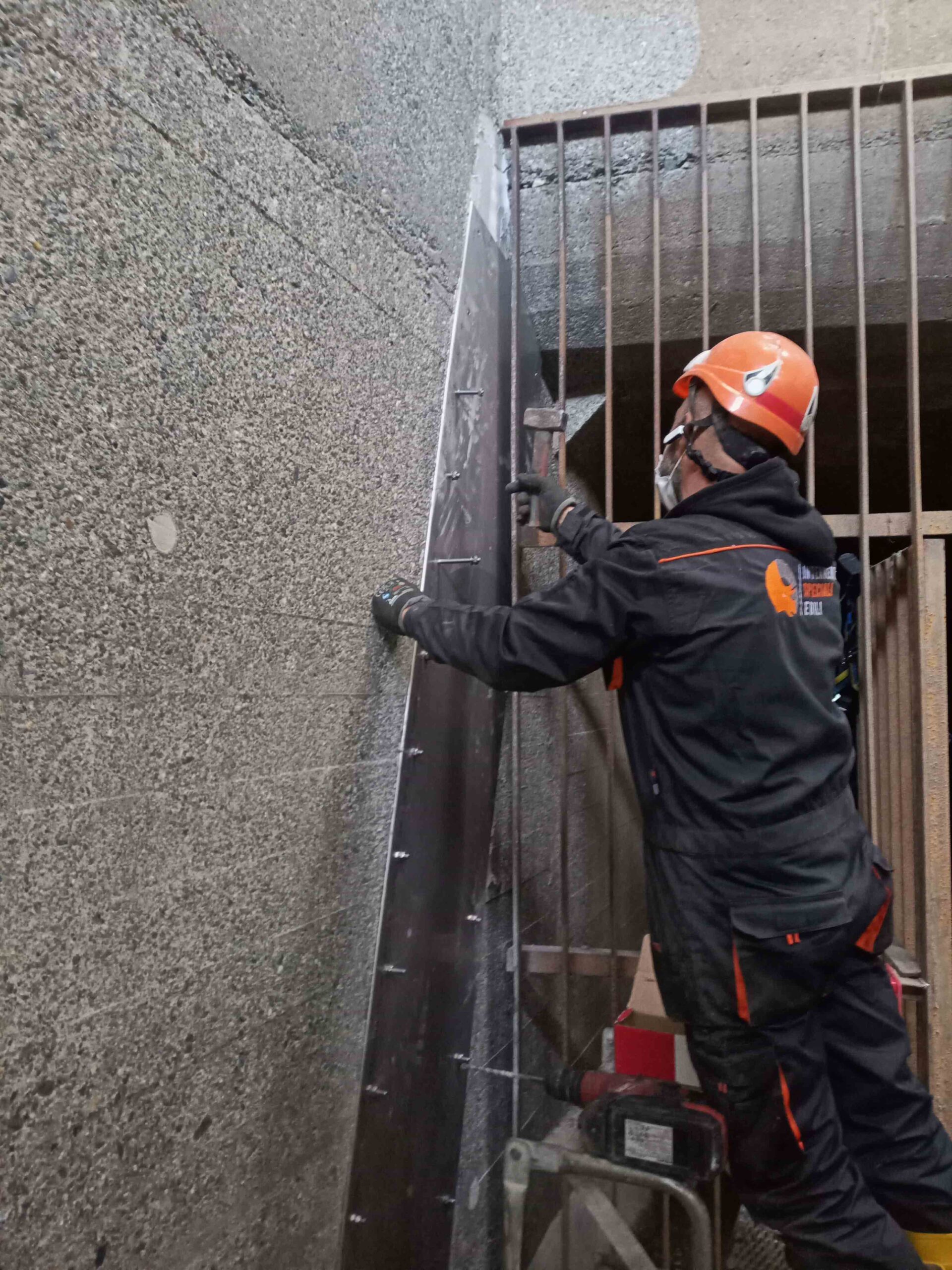
Structural consolidation and concrete restoration
Recovery and safe restoration of deteriorated structures, masonry and buildings
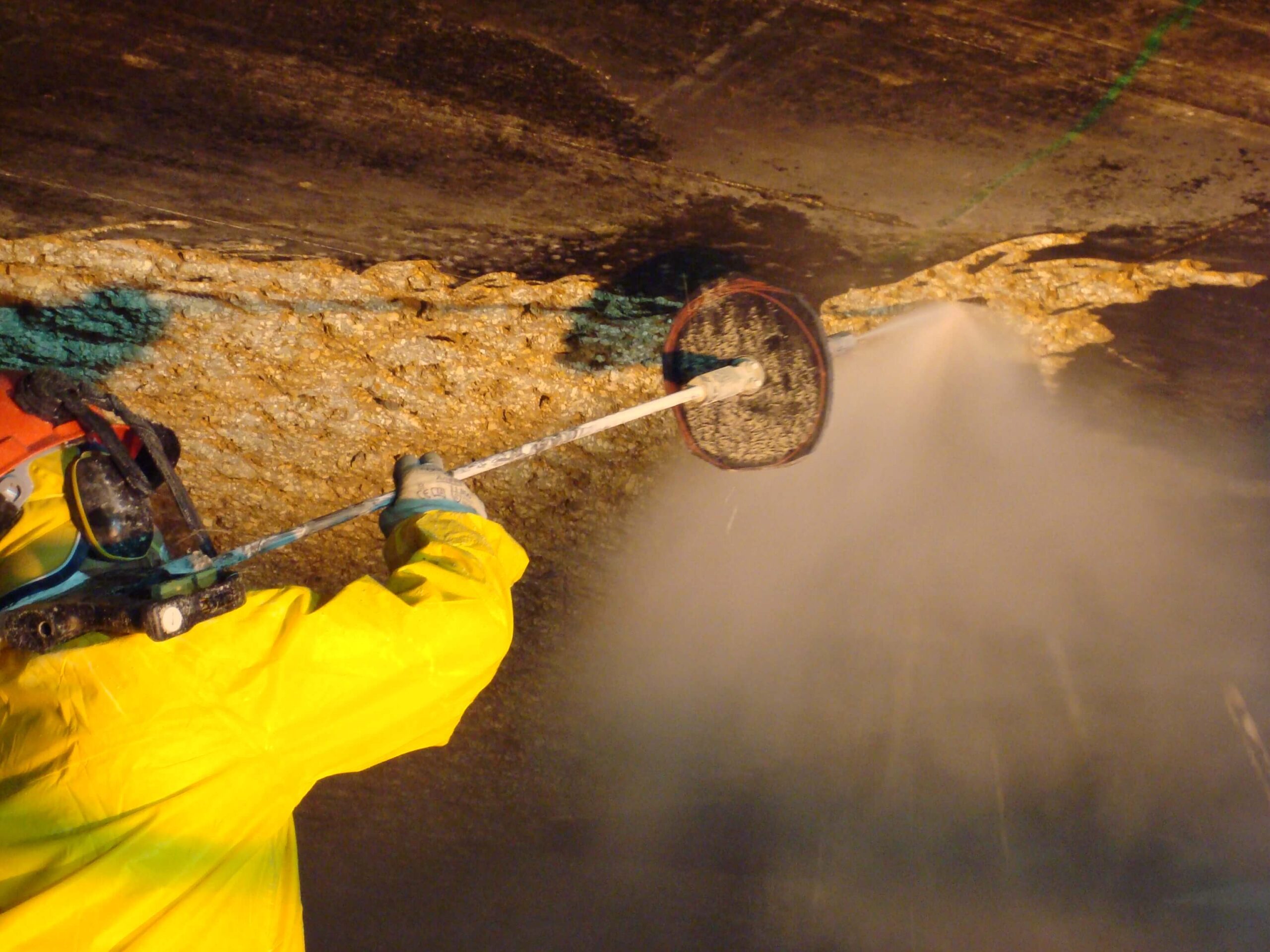
Concrete restoration with passivation of reinforcement rods and application of fibre-reinforced mortar
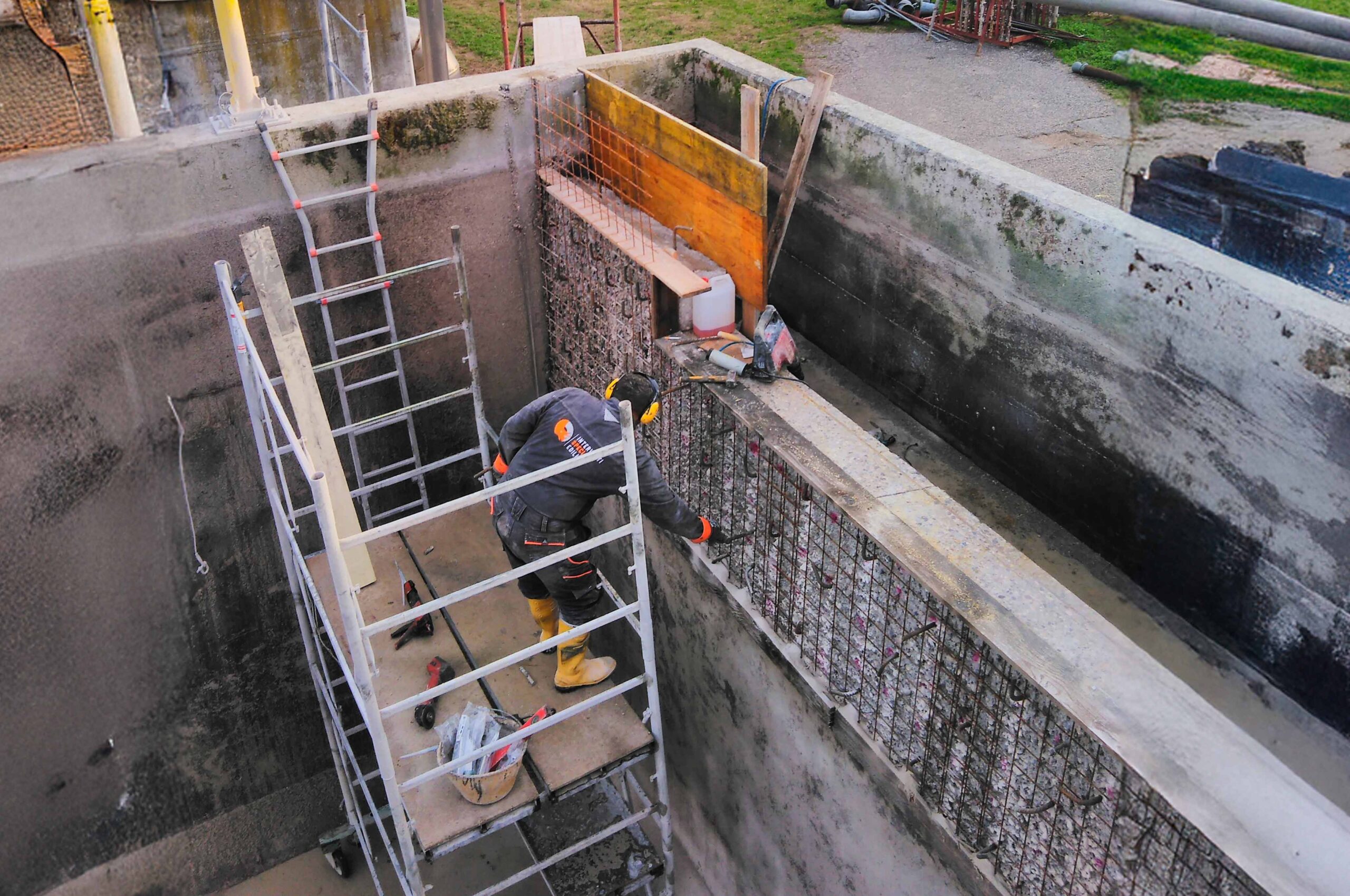
Concrete restoration is a fundamental intervention for preserving durability and safety of reinforced concrete structures. This process includes the passivation of reinforcement bars and the application of fibre-reinforced mortars, which together contribute to restoring the mechanical properties and ensuring protection against corrosion.
To achieve these results, a chemical treatment on the surface of exposed metals, creating a protective film that prevents corrosion and improves the longevity of the structure, especially in contexts where moisture and aggressive agents can compromise the integrity of concrete.
The application of fibre-reinforced mortars, containing reinforcing fibres such as steel or polypropylene, provides superior resistance to mechanical stress and greater durability compared to traditional mortars, enabling restore continuity and resistance of damaged concrete, as well as improving adhesion characteristics.
Main applications
Rehabilitation of degraded reinforced concrete structures
Work on bridges, viaducts and infrastructure
Consolidation of works in aggressive environments
Restoration of deteriorated structural elements
Preventive maintenance
Consolidation of masonry masses by injecting binder mortars
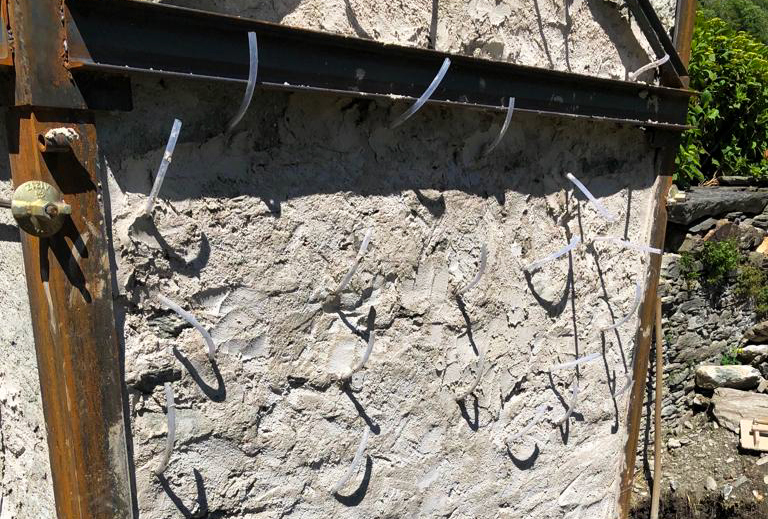
We offer a service of consolidation of walls and walls through binder mortar injections, an effective solution to restore the stability e durability of structures. We use mortars and grouts, both cement and lime-based, which are injected with the aid of controlled pressure pumps, so as to guarantee a homogeneous and precise filling of any internal porosity.
This type of intervention lends itself to solve structural degradation problems, improving the overall strength and extending the life of buildings. The injection process is particularly effective for consolidate drystone masonry, chaotic and inconsistent, where it is essential to restore continuity and solidity of structure.
Main applications
Stabilisation of historic and monumental structures
Reinforcement of degraded dry-stone walls
Filling of cavities and non-visible internal voids
Restoring cohesion in damaged masonry
Injections into arches and vaults to increase stability
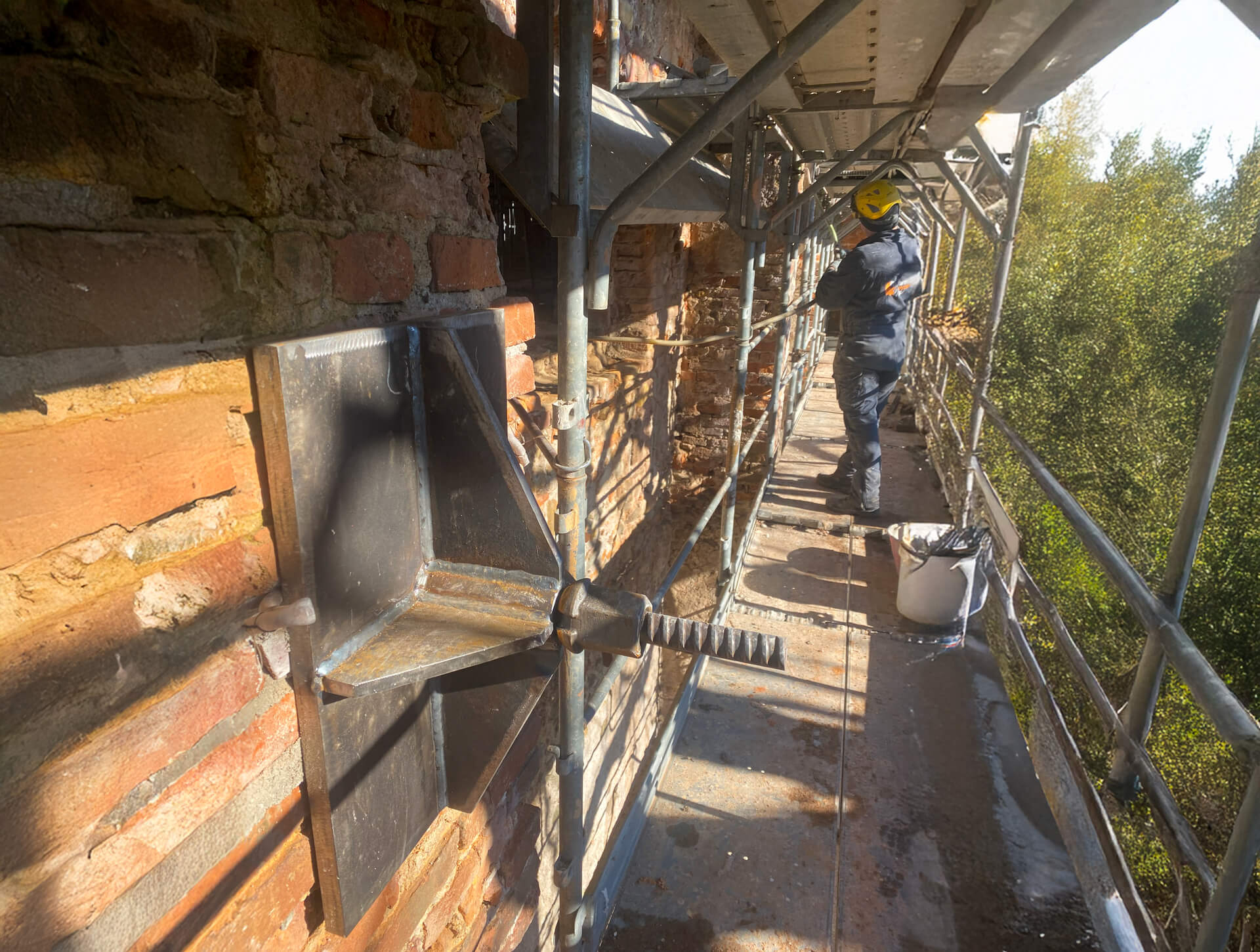
Positioning of tie rods for renovation and static consolidation
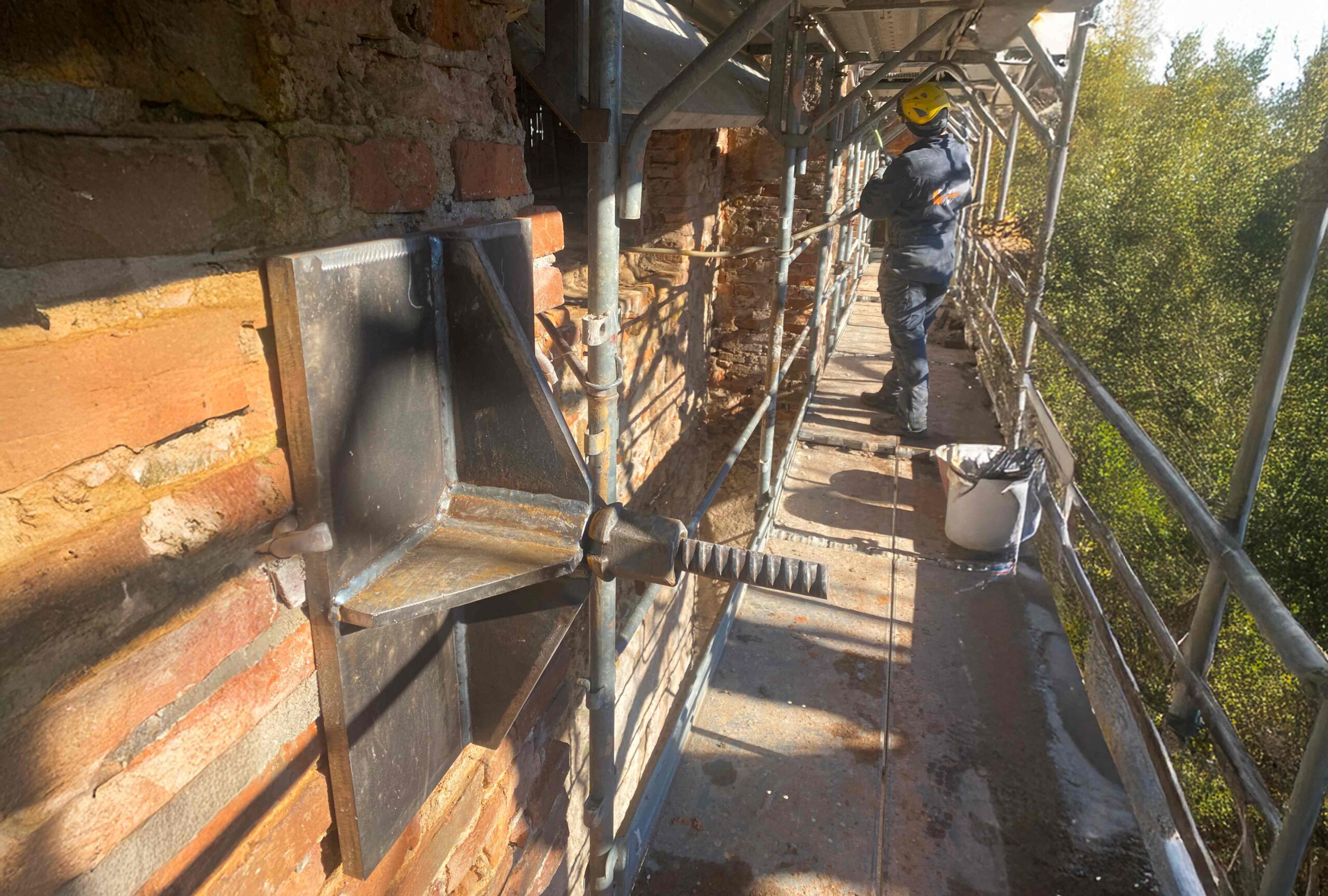
L’impiego di tiranti in acciaio armonico o in materiali ad alta resistenza rappresenta una soluzione ingegneristica essenziale per garantire stabilità e sicurezza alle strutture nel tempo.
Positioned to transfer forces and stresses in a controlled manner, tension rods enable the consolidation of buildings, retaining walls and other vulnerable structures. This solution is particularly effective in the renovation of historic buildings, where it is necessary to reinforce without compromising the architectural appearance.
Our company employs two main types of anchors:
- Tiranti attivi con cavi a trefoli, progettati per applicare una tensione attiva alla struttura, incrementandone stabilità e resistenza.
- Tiranti passivi con barre in acciaio (ad esempio Diwidag o Gewi), che rappresentano una soluzione efficace e affidabile per il consolidamento strutturale.
Main applications
Consolidation of historic buildings without altering their aesthetics
Stabilisation of retaining walls or drystone walls
Reinforcement of arches, vaults and roofs
Securing of structures subject to static instability
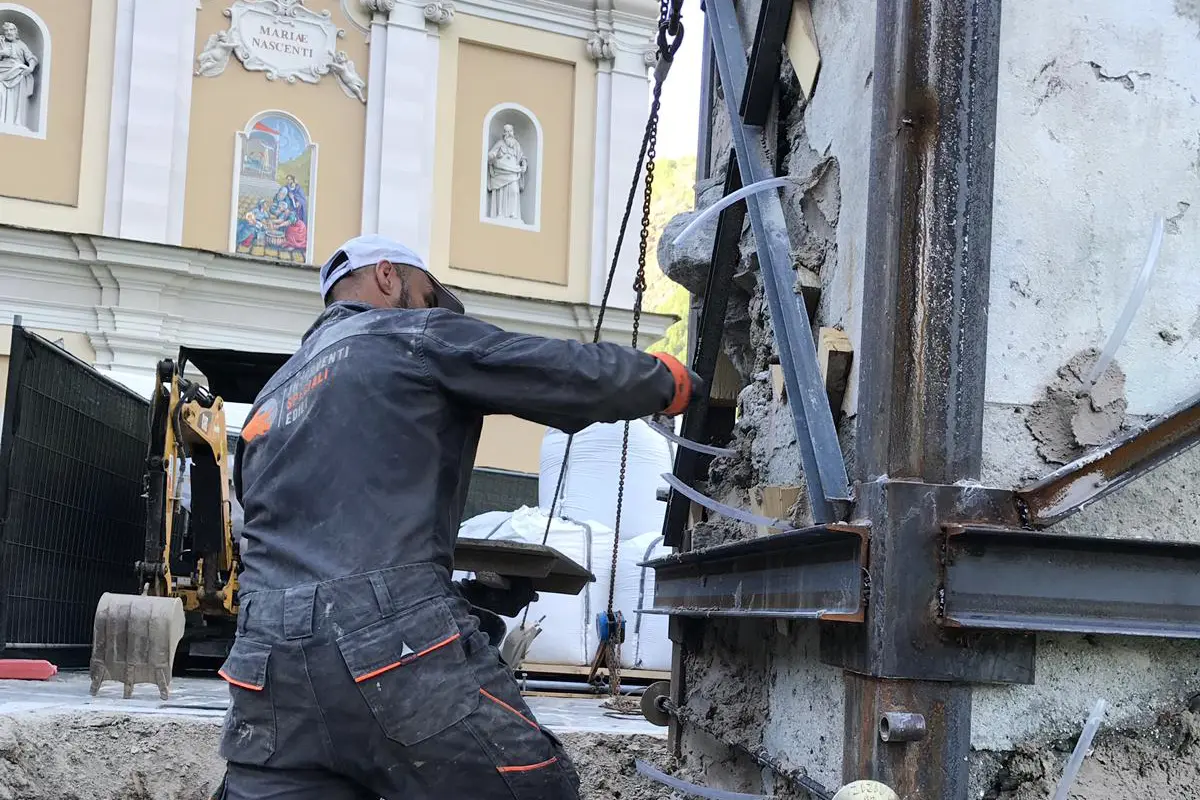
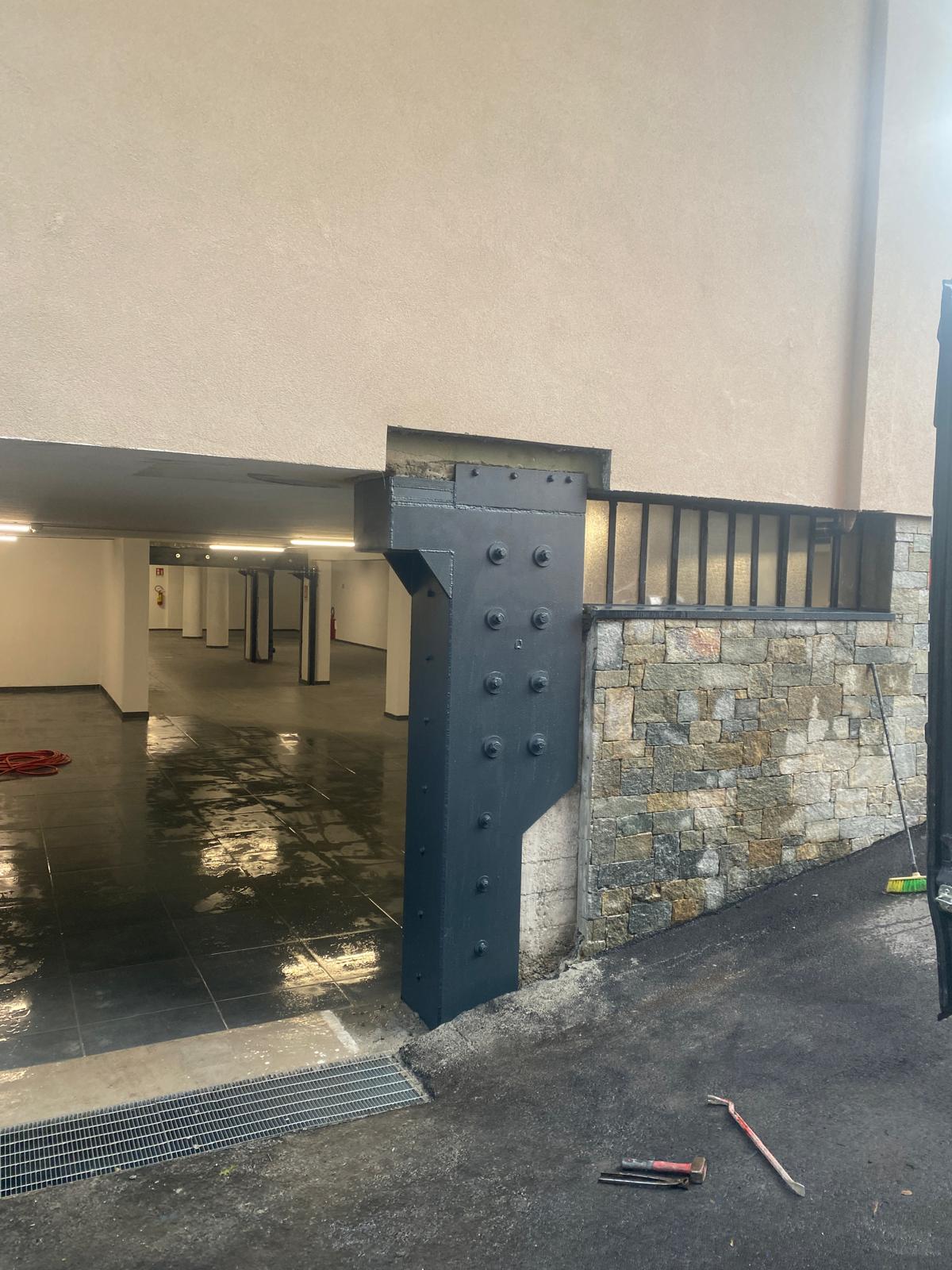
Anchoring and reinforcement of unstable façades, pillars and walls
Reinforced seams
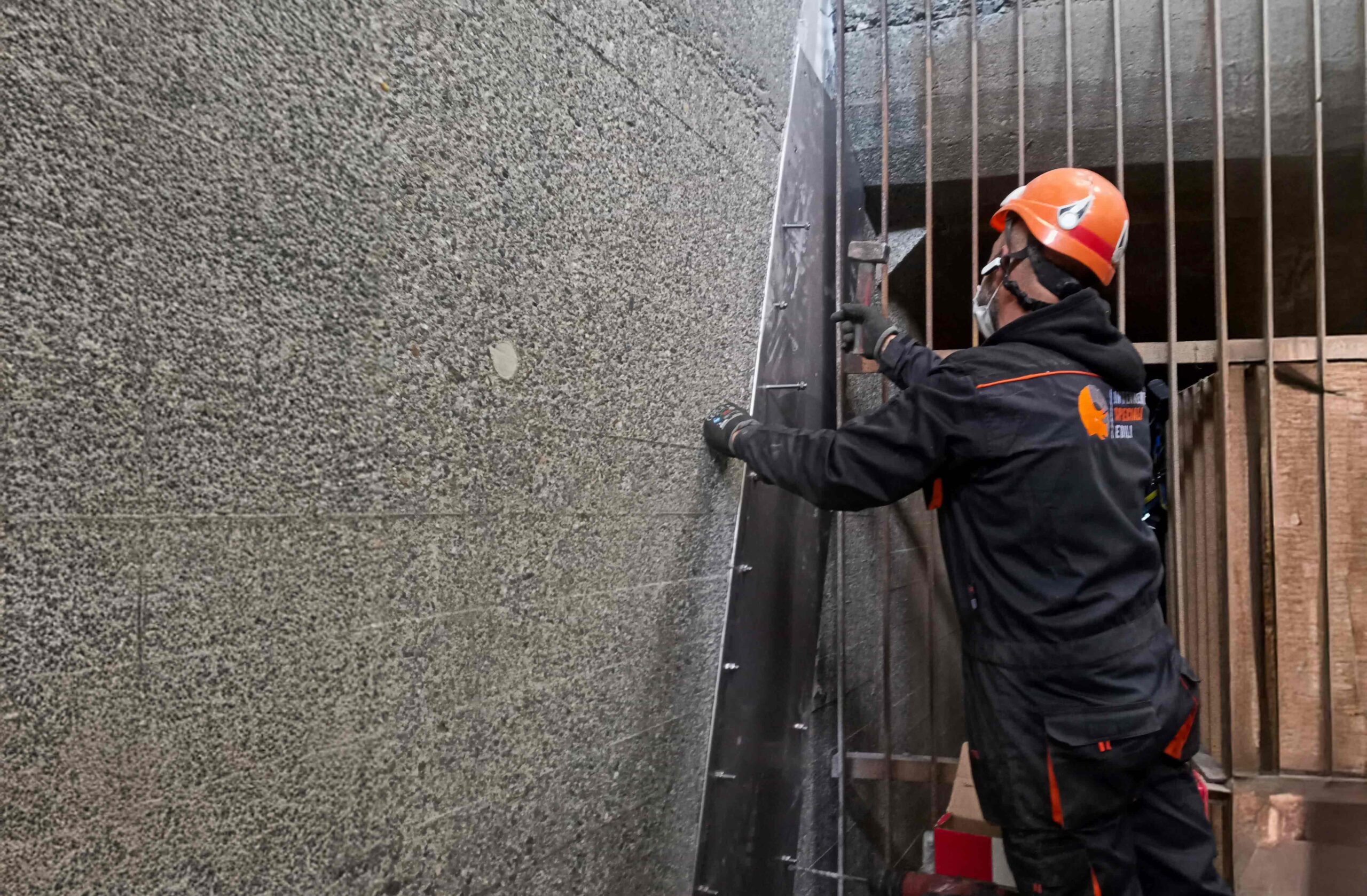
Le cuciture armate sono una tecnica avanzata e poco invasiva per il consolidamento strutturale di muri lesionati, finalizzata a ripristinare la stabilità e l’integrità delle strutture. Consistono nell’inserimento di barre di armatura all’interno delle murature compromesse, in modo da creare un rinforzo efficace che permetta di distribuire le sollecitazioni in modo uniforme e di prevenire ulteriori fessurazioni.
The process begins with a careful analysis of the condition of the wall to identify the most damaged areas. Subsequently, openings are made at strategic points in the wall or slab to insert reinforcement bars, which are then fixed with special mortars or high-performance resins. These mortars anchor the bars and also help to improve the cohesion of the surrounding material, increasing the overall strength of the structure.
Le cuciture armate possono essere realizzate in diversi orientamenti e configurazioni, a seconda delle specifiche necessità del progetto. Questa flessibilità consente di affrontare una vasta gamma di problematiche legate al deterioramento delle murature, come fessurazioni orizzontali o verticali, cedimenti locali o problemi di stabilità generale, nell’ambito del consolidamento di edifici storici, abitazioni private e strutture pubbliche.