2019
Walo Bertschinger AG
Lugano, Switzerland
The railway tunnel on the Paradiso-Melide section is a strategic element of the line connecting Lugano to Melide, Switzerland. It is a double-track structure that has been in operation since the 19th century and crosses a complex section from a geomorphologic and infrastructural point of view. From a construction point of view, the tunnel is characterised by reinforced concrete walls in the lower part, while the vault and intrados are made of natural stone.
Considering that the rail traffic on the route is continuous, any maintenance work had to be planned in such a way as to guarantee the full operation of the trains, while ensuring the safety of operators and users.
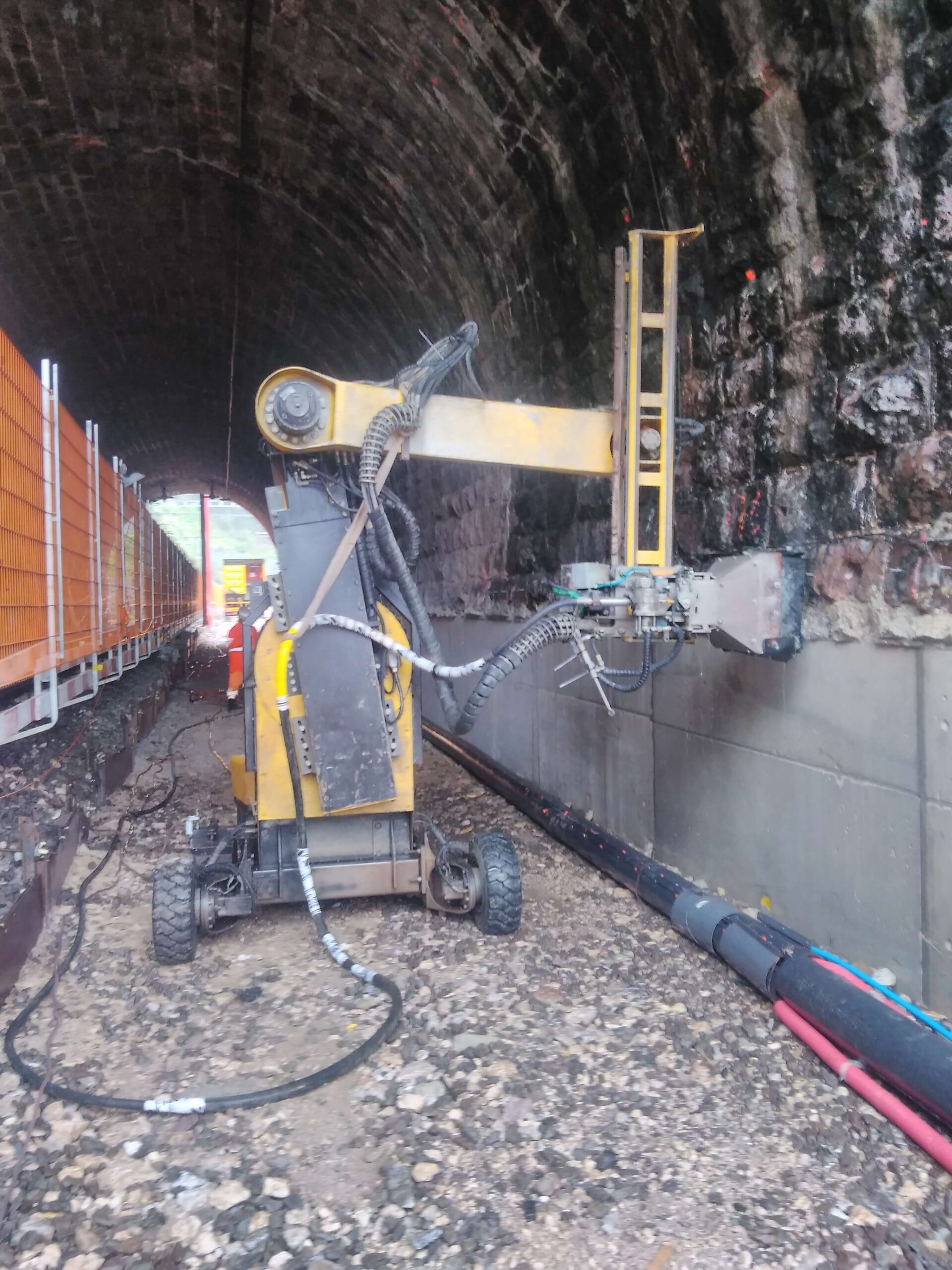
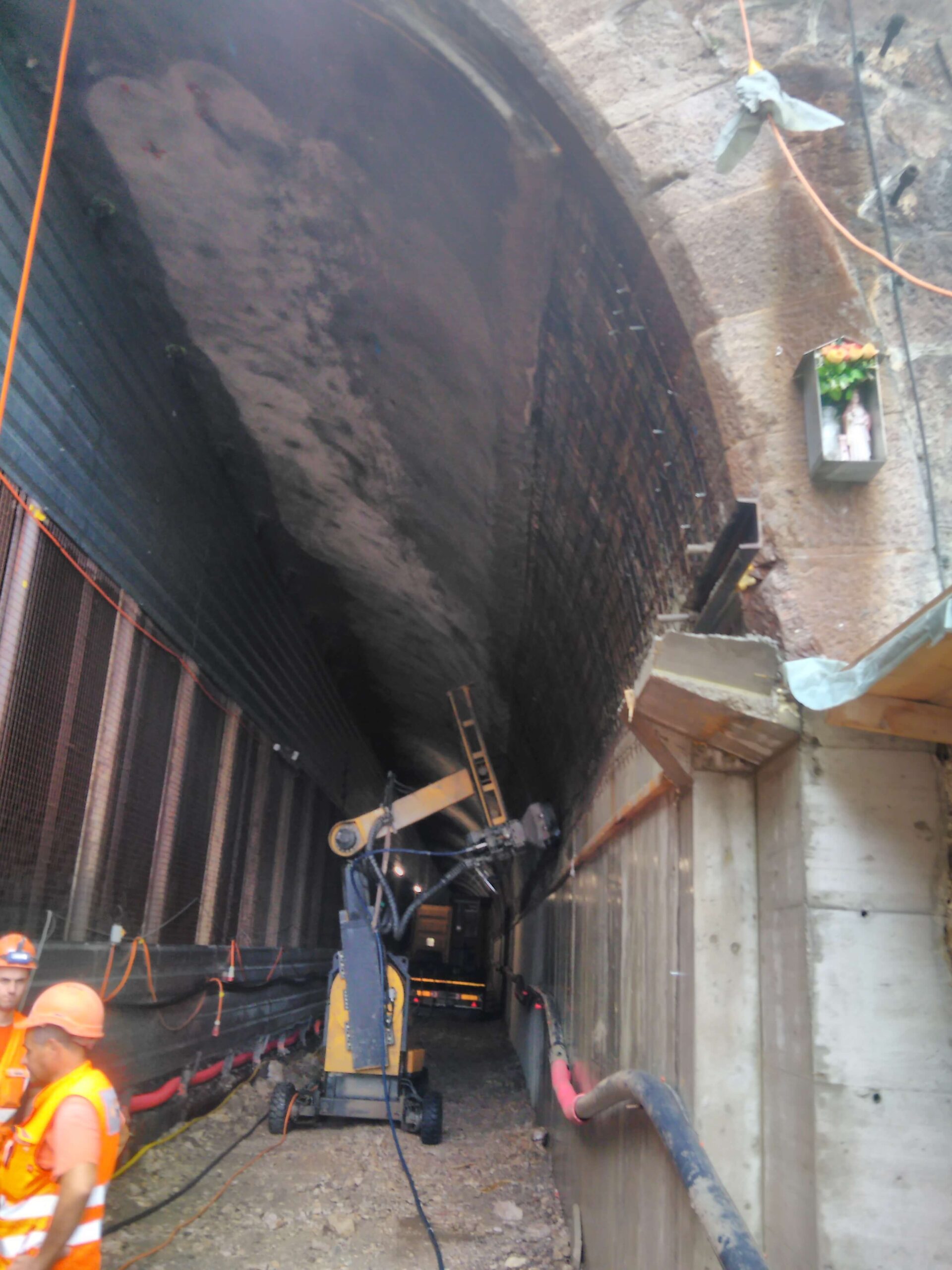
The intervention included an iscrubbing and extensive hydroscarification of the tunnel to a height of approximately 8 metres from the base to the intrados of the vault. In order to operate safely while keeping one track in operation, a barrier was set up in the middle of the tunnel: one track was temporarily excluded while the other remained in operation.
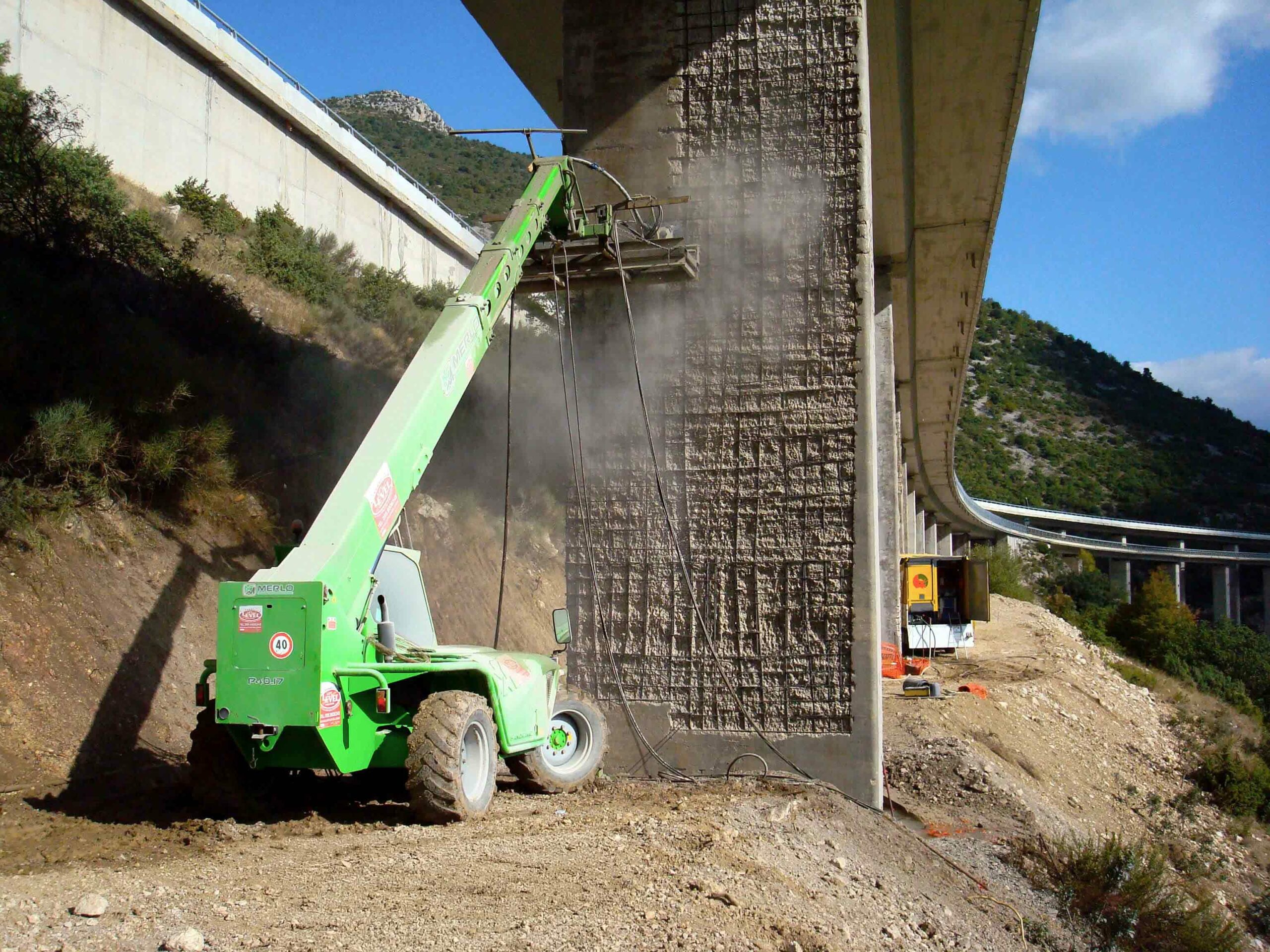
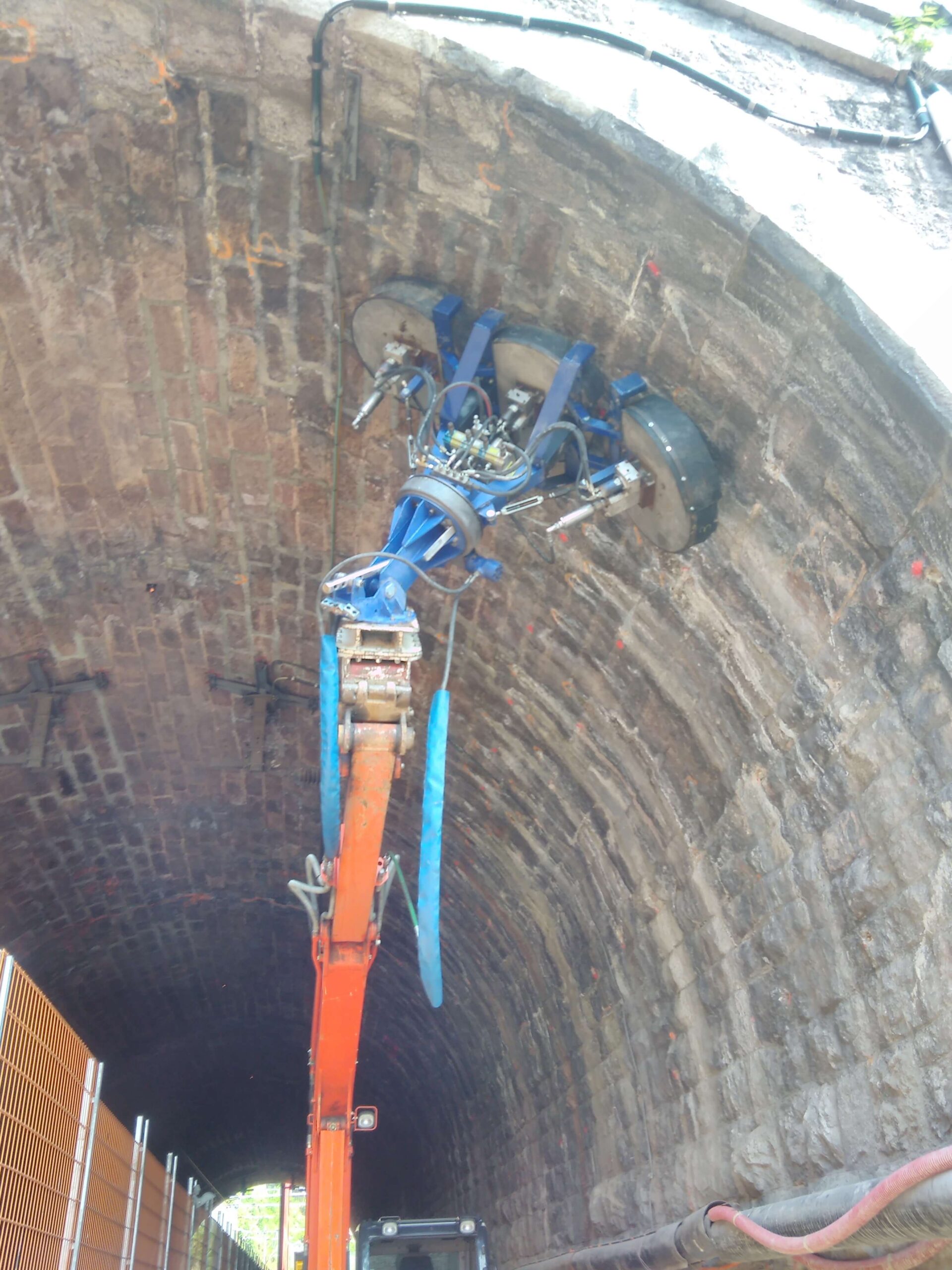
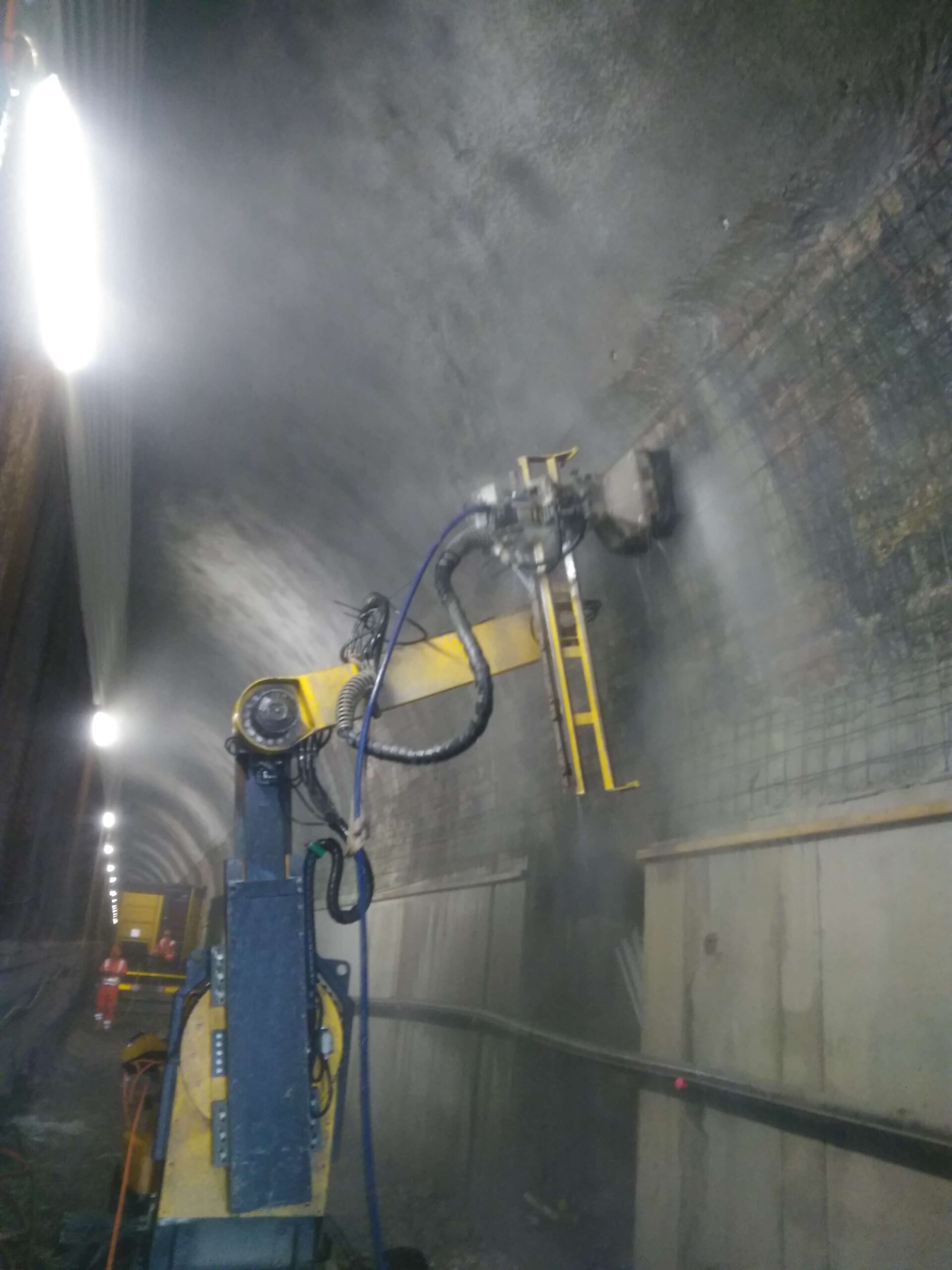
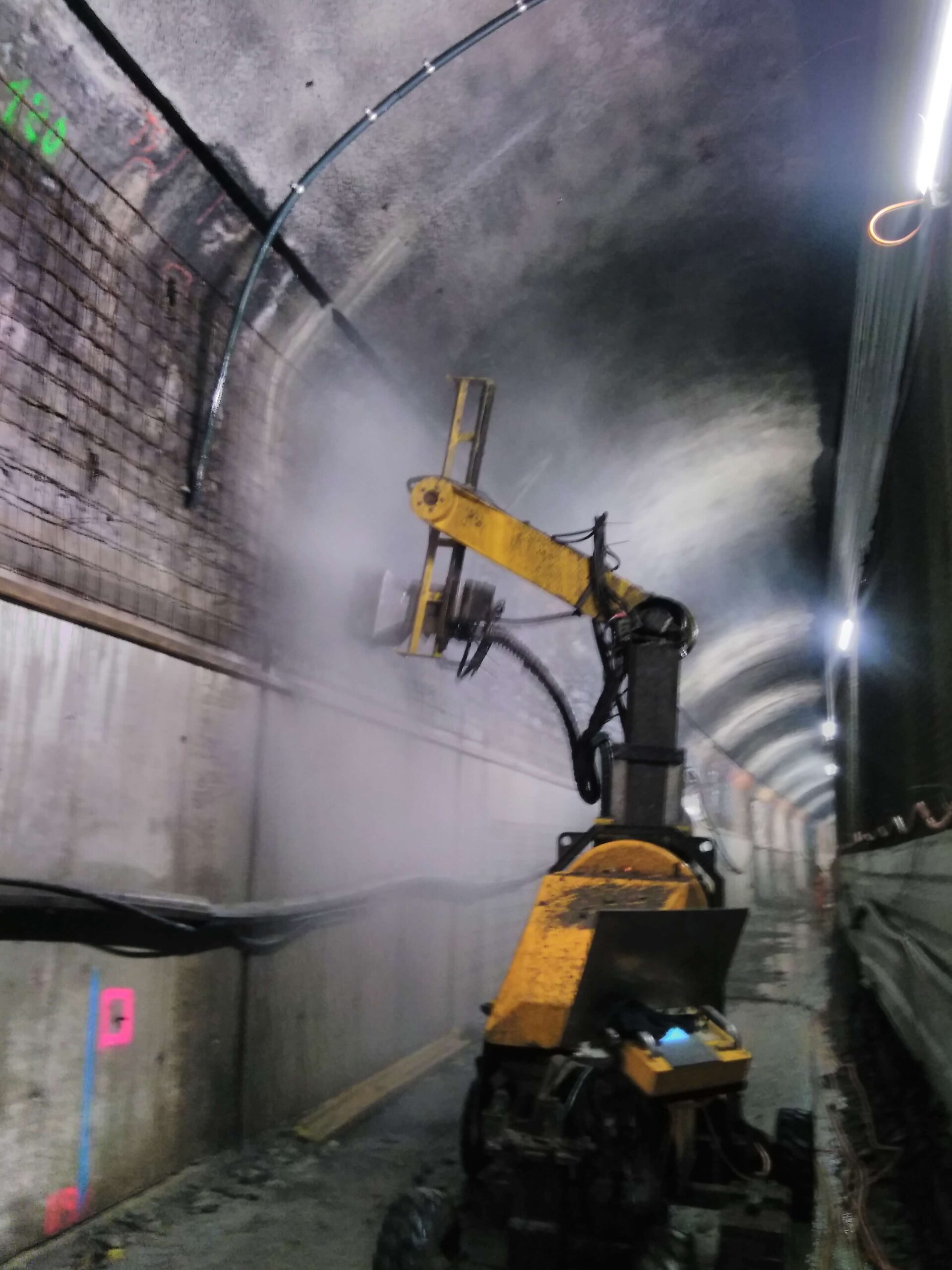
The first activity involved the hydro-washing of the upper part of the tunnel, aimed at removing smog, residues and loose parts of the stone. A rotating nozzle system, consisting of three swivelling discs, known as a Buster, mounted on the arm of an excavator, was used to perform this operation. This tool made it possible to effectively remove the loose material, easily reaching the end of the tunnel vault.
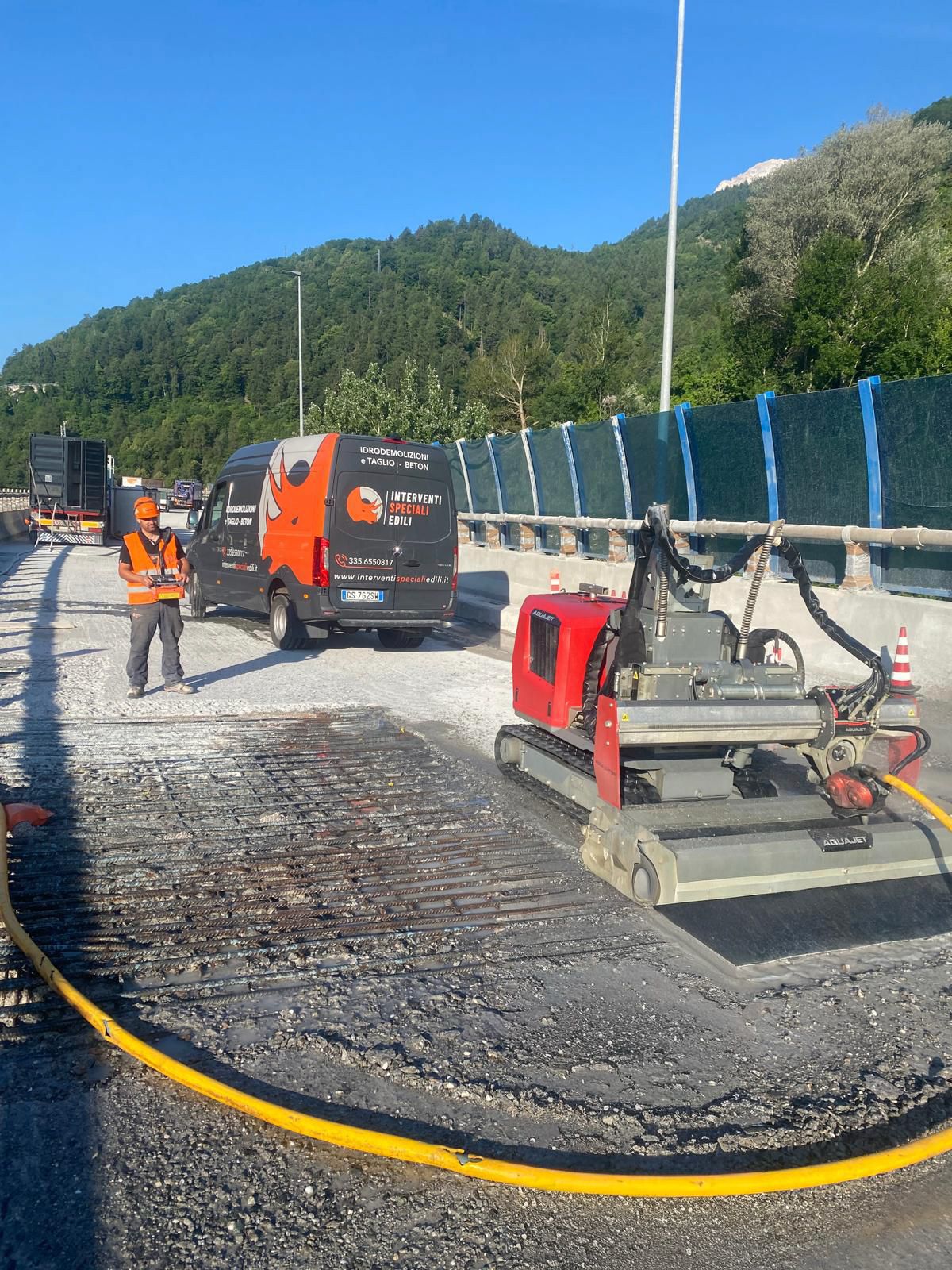
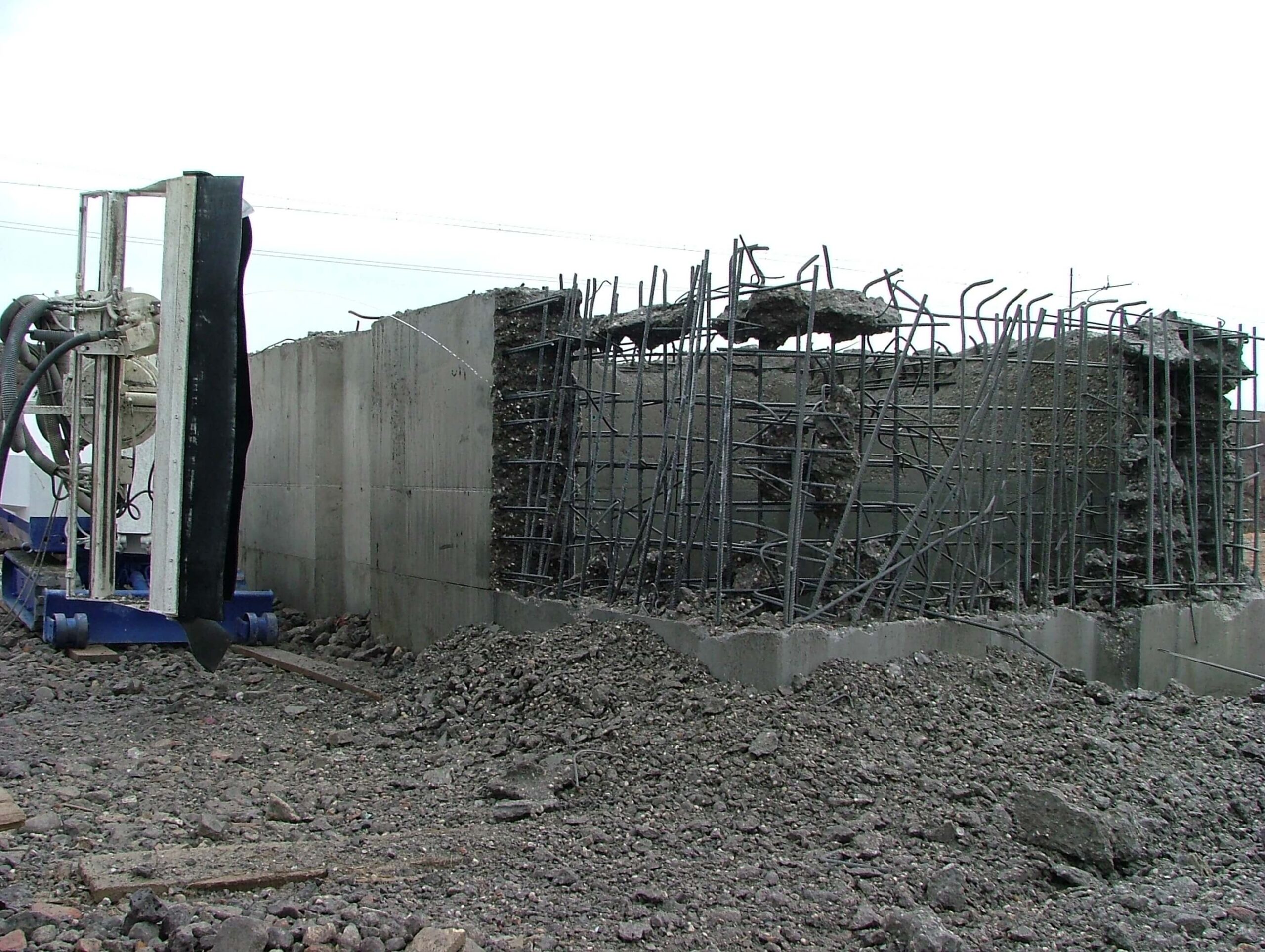
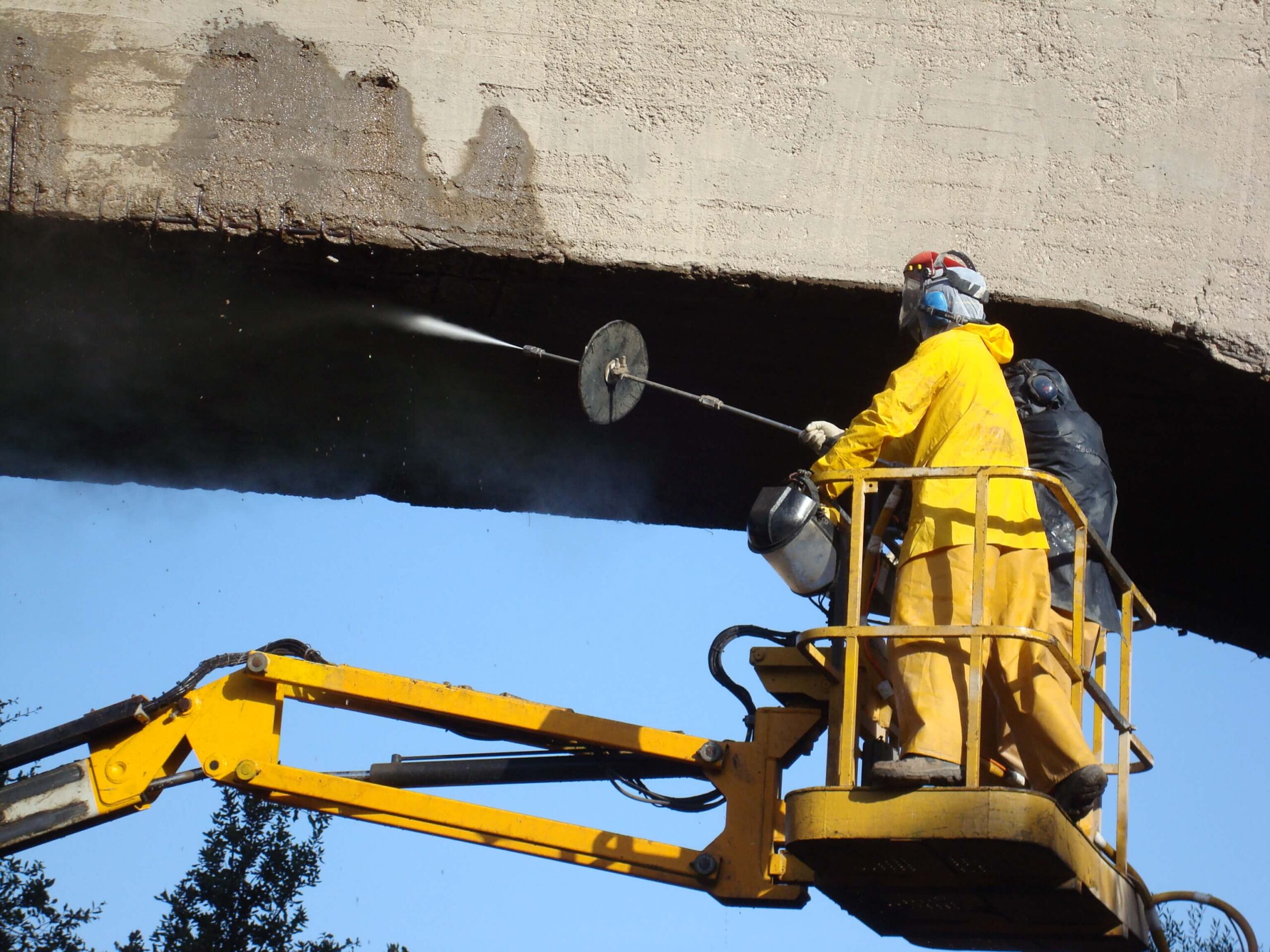
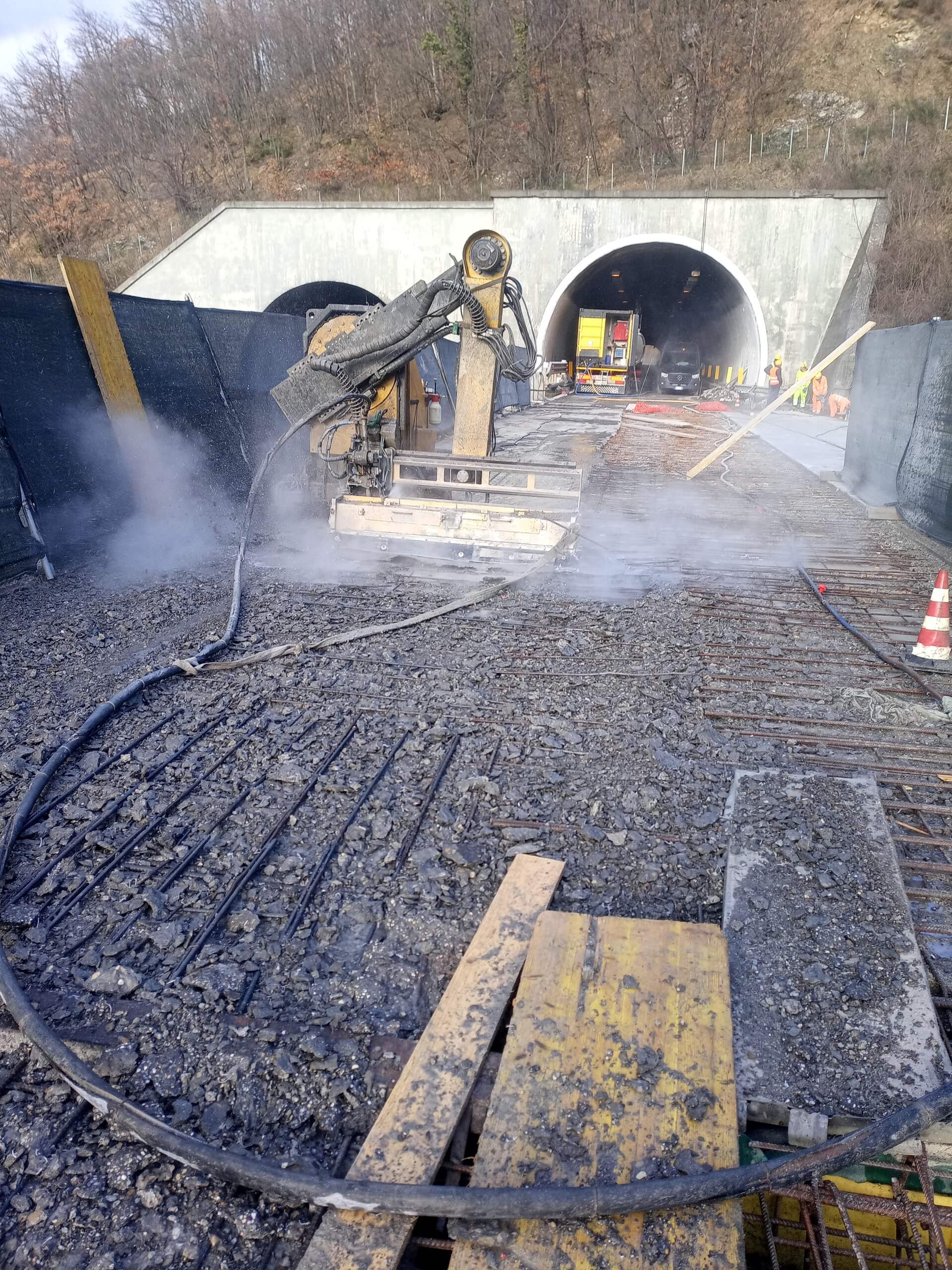
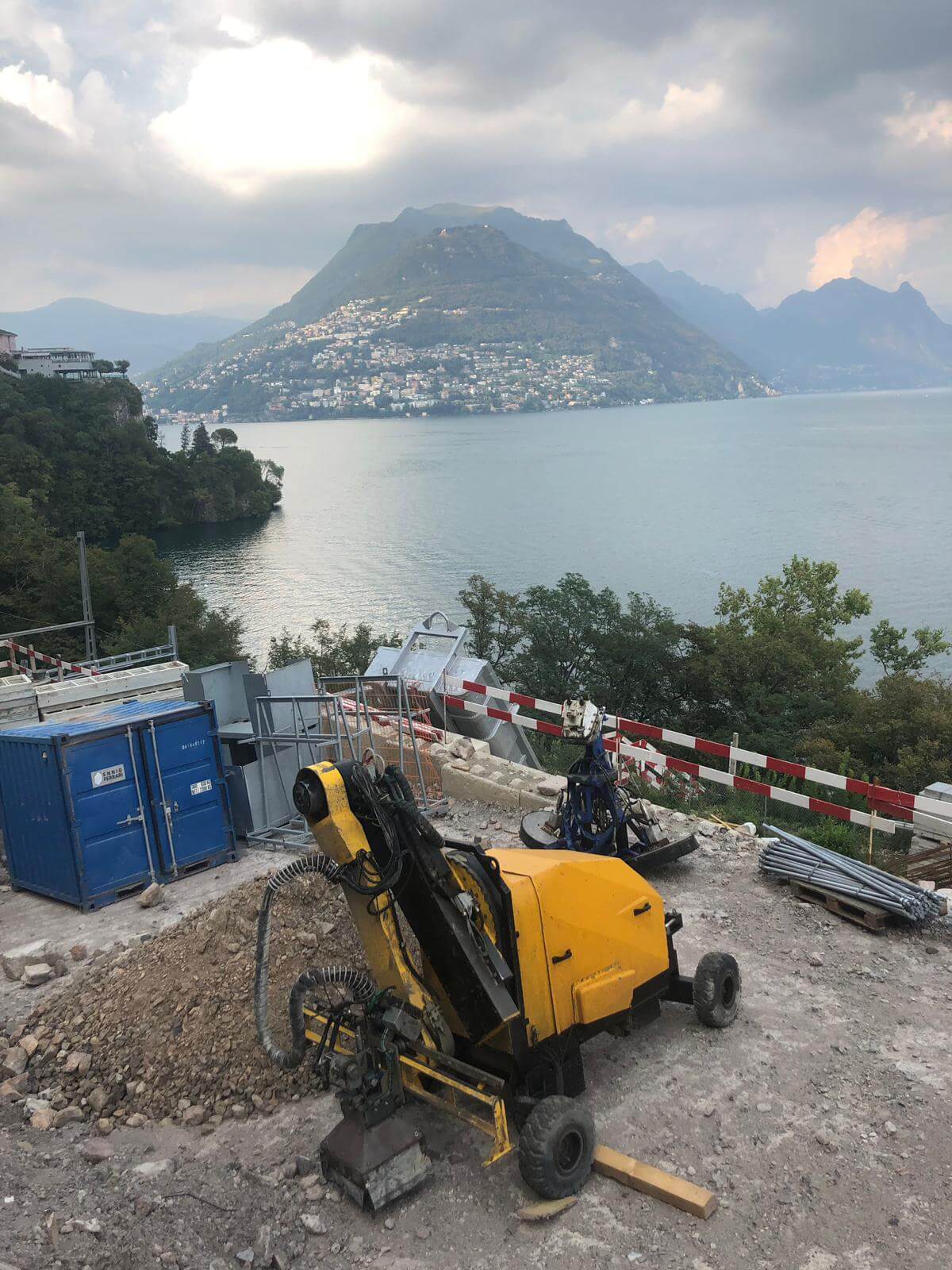
Following the hydro-washing, robotised hydrodemolition of the reinforced concrete walls of the tunnel was carried out. The intervention involved the removal of thicknesses between 10 and 15 cm, for a height of approximately 2.5 m, including the area underneath located approximately 50 cm from the level of the track. At the end of the work, the same operation was carried out on the opposite side of the tunnel, allowing the maintenance to be completed without interfering with normal rail traffic operations.
The ultimate goal of the intervention was the overall redevelopment of the tunnel, improving its durability, safety and functionality for rail traffic.